New Vikings
Our first games of Saga (some four years ago now) were Vikings and Irish, and after the new battle boards have been released for the Age of Vikings universe, it seemed like a good idea to revisit them. There are some quite big differences, especially for the Vikings which seems to radically change their core tactics.
We had standard 6 point armies, with the following builds:
Vikings
- Warlord
- 8 Warriors + 2 berserkers
- 8 Warriors + 2 berserkers
- 4 Hearthguard
- 4 Hearthguard
- 12 Levees with bows
Irish
- Warlord
- 2 Curaidh
- 4 Hearthguard with heavy weapons
- 4 Hearthguard mounted
- 8 Warriors with javelins
- 8 Warriors with javelins
- 12 levees with slings
We determined the game using the Book of Battles system, fighting in a marshy country (bad for the Irish), deploying with standard battle lines and no double activations on first turn. Victory conditions were survival points, with bonus points for getting a unit to the far table edge.
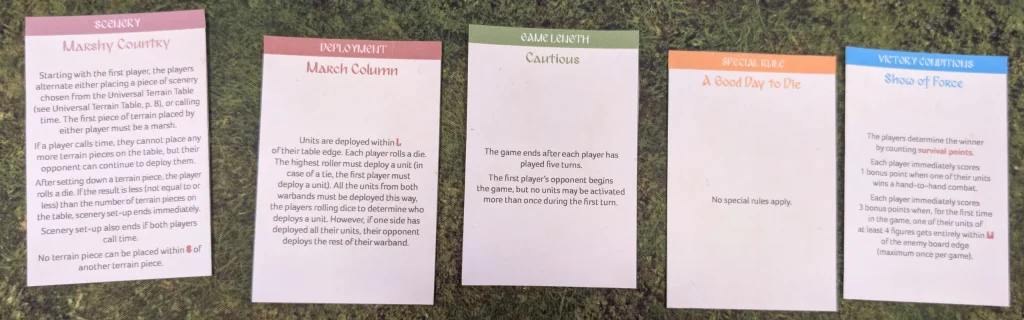
We got the turn order wrong though. With the Irish as first player, they went first when actually their opponent should have gone first. The ‘first player’ terminology is sometimes confusing.
Turn 1
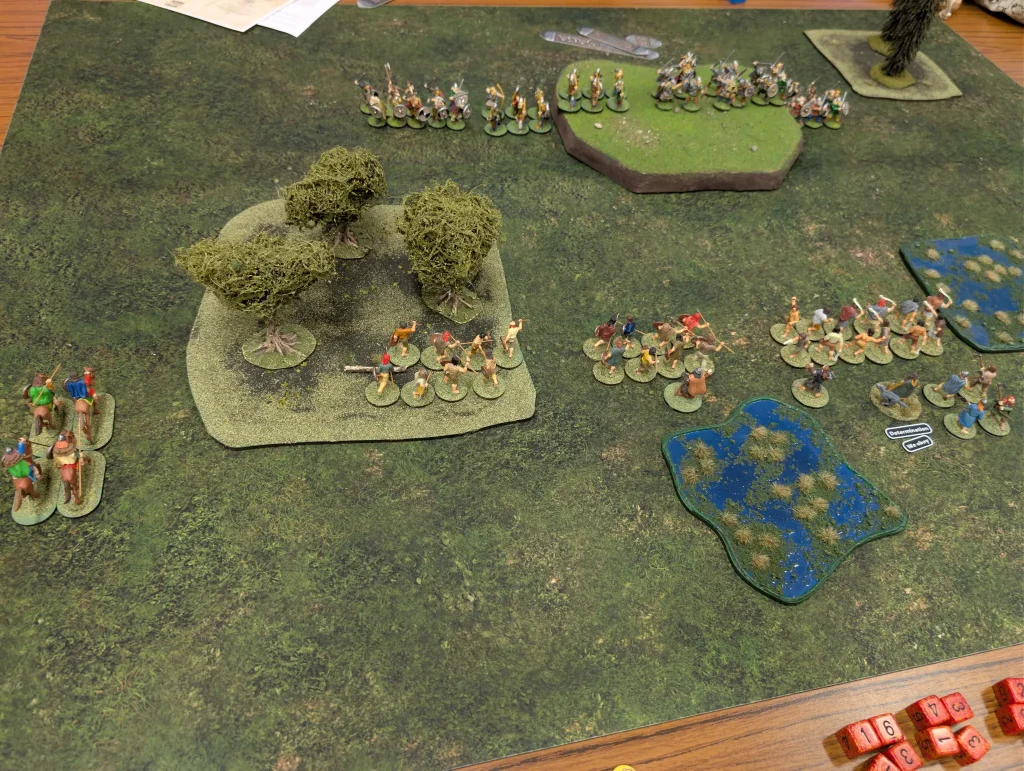
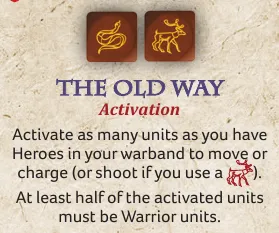
The Irish went first, using The Old Way to move their mounted hearthguard up the table to try and flank the Vikings and maybe get in behind them. My two units of warriors moved forward a bit, getting one unit up through the woods and the other close to the woods so that I could use Heirs of Mil to protect them in the Viking turn. My slingers also moved forward, ready to hit the Vikings as soon as they approached.
The Vikings started moving their Western warriors towards my horsemen, but couldn’t quite reach them. Which was good. The new berserker rules stop berserkers being glass cannons, and now rather than being a unit by themselves are inserted into a unit of warriors. Each adds +4 attack dice, so this unit of 8 warriors and 2 berserkers would have 16 attack dice. I didn’t really want to fight them.
However, I forgot to use Sons of Dana to shoot at the Vikings when they came close to the woods.
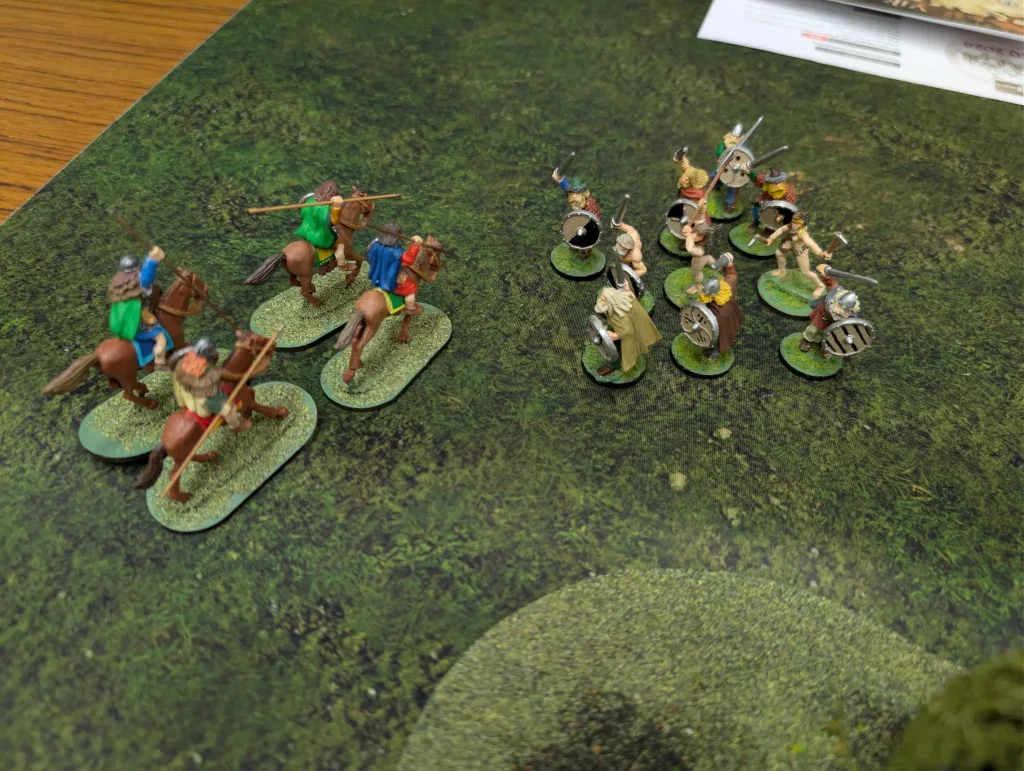
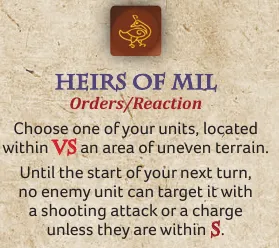
The viking archers couldn’t shoot at my warriors outside the woods due to Heirs of Mil, so shot at the ones in the woods. With Wail of the Banshee I was able to resist all the hits, and took no casualties.
This was a relatively relaxing turn, with no melee and no casualties on either side. The Irish were closer to the Vikings than they might want to me, but my hope was to mostly try and keep out of their way.
The Vikings had wanted to use Ragnarok, but could only do one activation per unit this turn, so wasn’t able to. Ragnarok has changed from needing two rares to needing only a single rare to activate. I’ve never seen it actually used in a game.
Turn 2
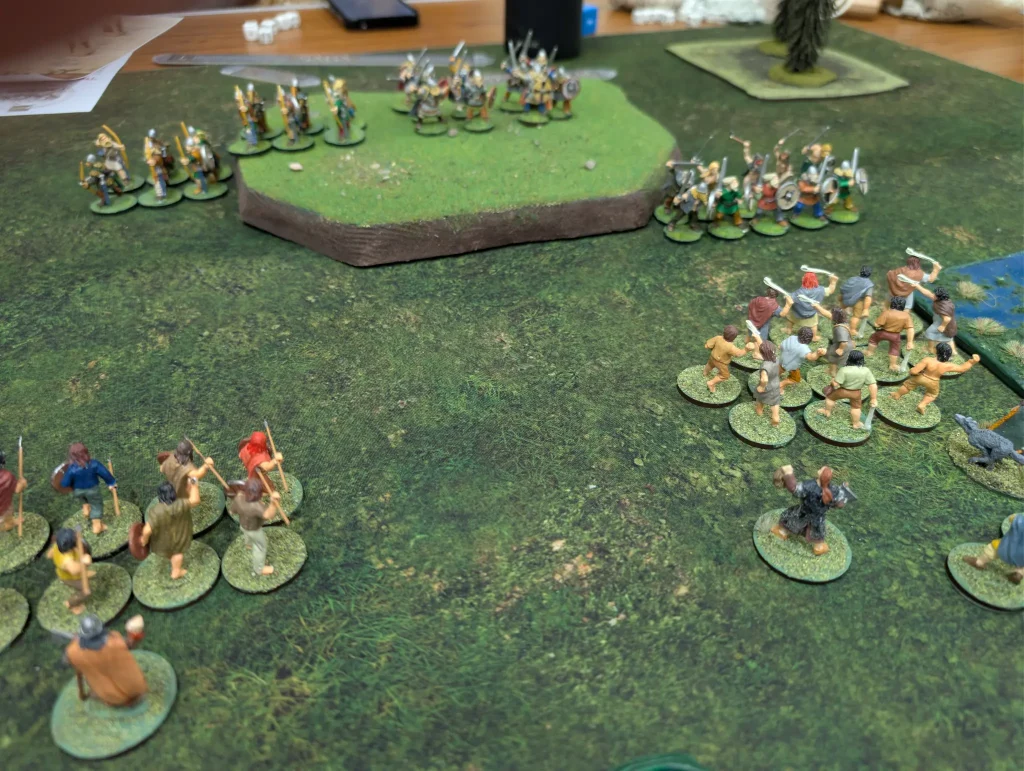
The Irish again use The Old Way, moving their horseman up to within M of the far table edge, so gaining a +3 bonus to their victory points. The two units of warriors moved up to within javelin range of the Viking front lines.
The Old Way has changed from only only being able to activate units with an armour of 3 or less, to needing at least half the activated units to be warriors. This has made it a lot more flexible.
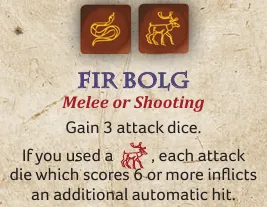
I then activated by mounted hearthguard a second time, charging into the rear of the viking archers. This gave me a fatigue, but I also threw in Firbolg for extra attack dice, and Wail of the Banshee to give myself a defensive bonus. The Vikings used Frigg to give themselves attack dice.
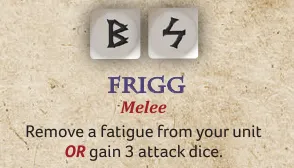
It was my 11 attack dice against their 7, but they had lower armour. However, I only got 5 hits and 2 kills, whilst they got 2 hits and 1 kill. I had been hoping for a much better result.
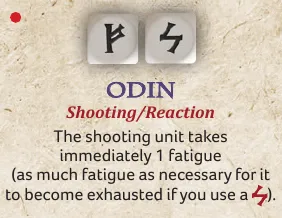
My javelin equipped warriors then made use of their free shooting attack to throw javelins at the archers and the Viking warriors. Against the levee, the Vikings played Odin with a rare, which meant by warriors immediately became exhausted. This was not good. Odin has improved in that it has become a lot easier to use, now only requiring a single die. Previously, it required two commons, which meant it was a big drain on your saga dice resources if you kept anything on it.
My second unit got a single kill on the warriors.
Finally, I used We Obey to get my slingers to sling, getting 2 kills on the Viking warriors on their eastern flank, and even killed a berserker.
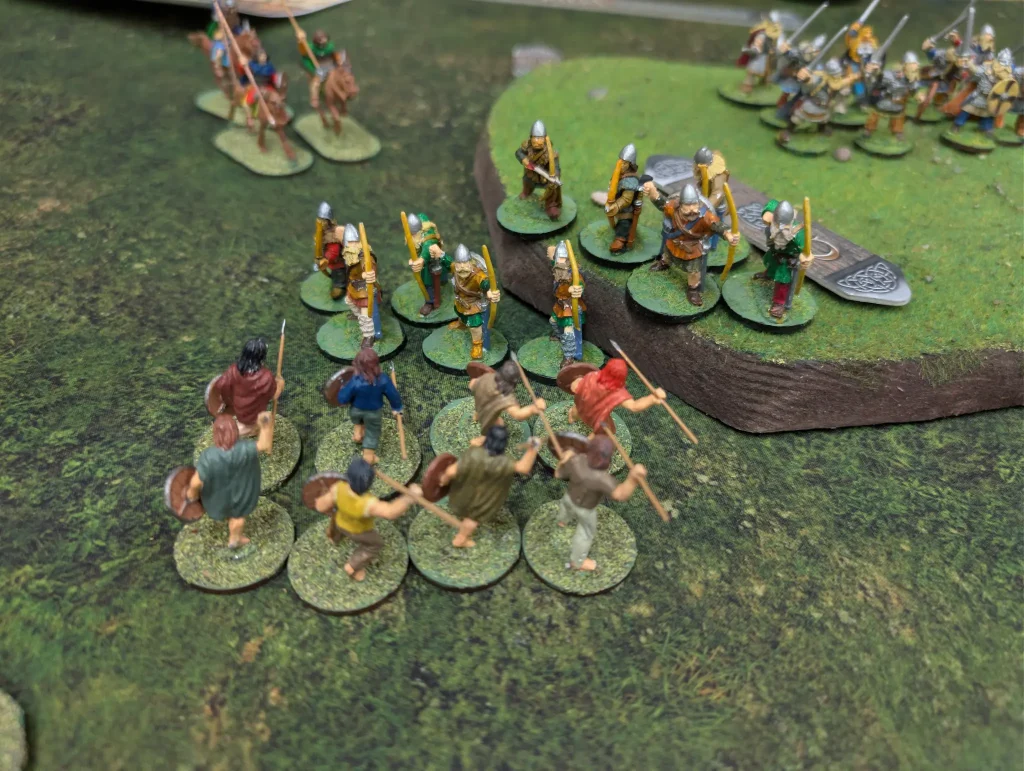
Finally, my slingers ran away, moving back away from the Viking warriors because they didn’t want to get charged by anything containing berserkers.
The Vikings started by moving their warriors towards the Irish slingers anyway, then they charged. It wasn’t pretty, and they managed to kill five of my levee and only took a single casualty themselves. We both used fatigue to lower than raise the armour of the warriors. At the back of my mind, I was thinking that maybe I didn’t want to use the Vikings’ fatigue, but I did.
So my levee slingers fell back, and then the Vikings charged again. This time they used Frigg to remove their fatigue, and got six skills, again taking a single casualty. My sole remaining slinger fell back again.
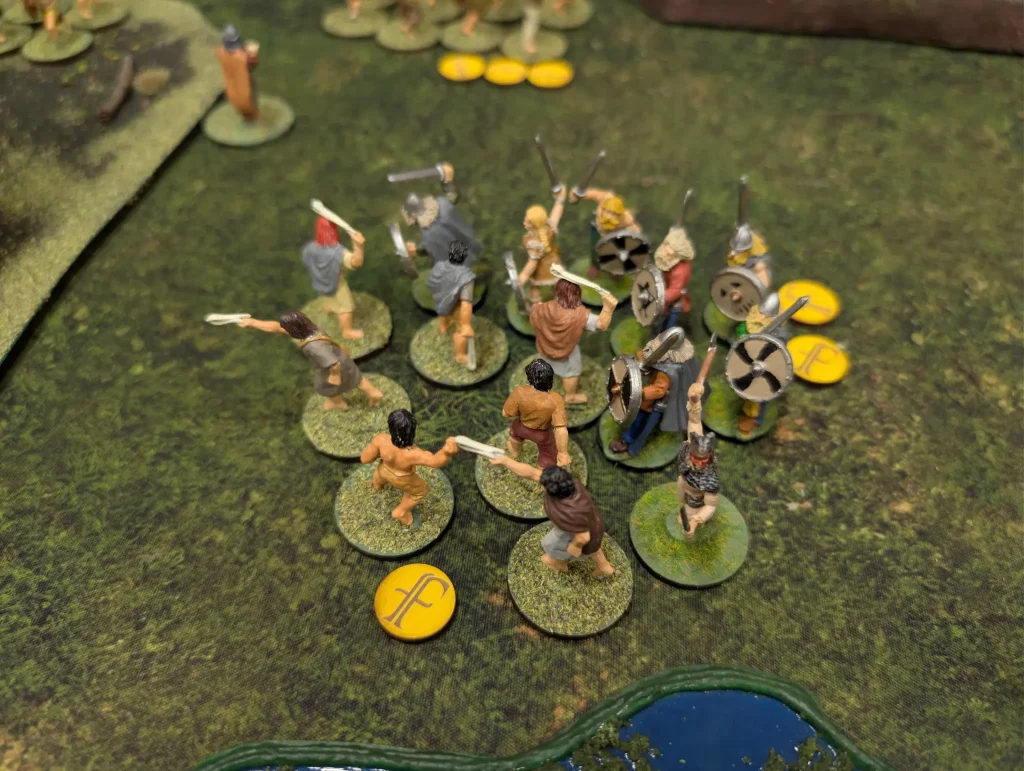
This time though I didn’t use the Viking fatigue, leaving them with two.
Finally, the Viking hearthguard on the hill charged my mounted hearthguard, wiping out the unit for only one casualty themselves.
Turn 3
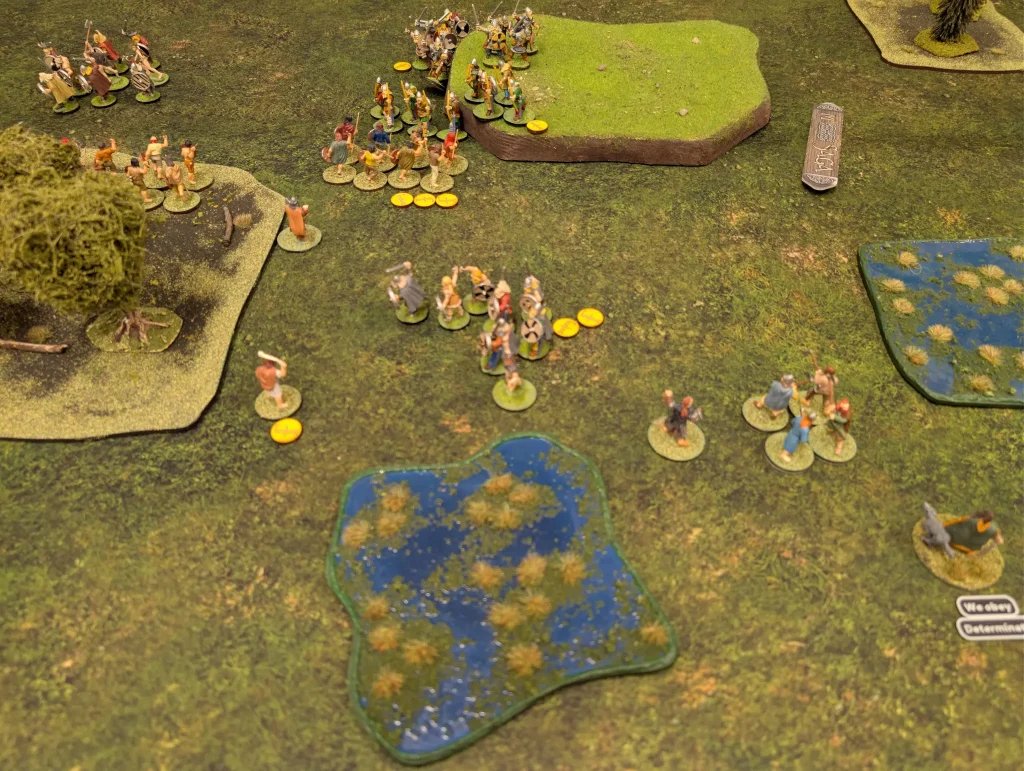
The Irish were in a bit of a bad state at this point. I decided though that I wanted to do something to hurt the Vikings, especially those warriors in the middle of the table. I was down two saga dice, but I had enough to do what I wanted.
First, my Curaidh charged the warriors. He only had 4 attack dice, against their 11, and got but a single kill. It was less than I was hoping for. He was wiped out (rolling five 1s on six defence dice didn’t help his survivability, even with his resilience), but he gave the warriors another fatigue, making them exhausted.
My Curaidh dying meant by hearthguard got a fatigue, so I had to rest them with a We Obey from my warlord. Something I’d forgotten to take into account, but I had one spare activation in my plan so that was okay.
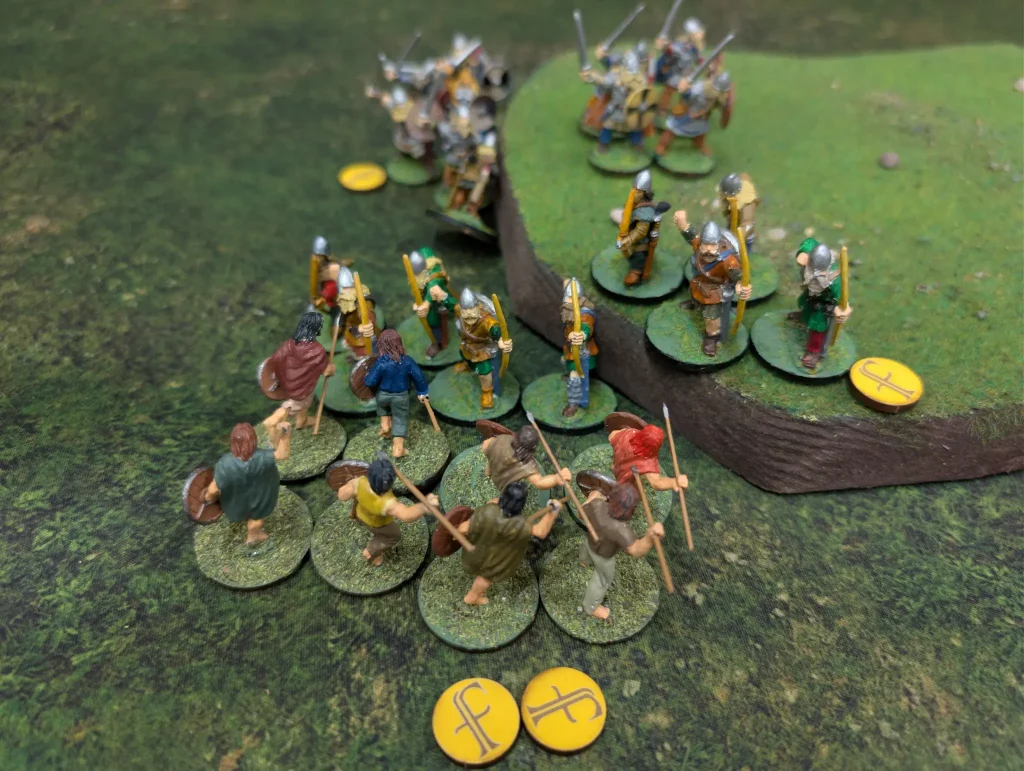
Then it was The Old Way to activate two units (since I was down a hero). My Javelin warriors charged the Viking archers, and I got two kills to their one. So the archers were forced back.
Then my hearthguard with heavy weapons activated, and charged the warriors. I only had 8 attack dice to their 10, but they were exhausted so at -1 to their attacks. I had heavy weapons, so was at +1 to my attacks. I also used Fir bolg to get 3 extra dice, plus any 6+ would score an extra hit.
This time I used all their fatigues, so only needed to roll 1+ to score a hit. I got 14 hits, they got 2. The warriors were wiped out, and my hearthguard suffered no casualties.
Finally, I took a free javelin shot at the other set of warriors and forgot that the Vikings had Odin. I became exhausted again.
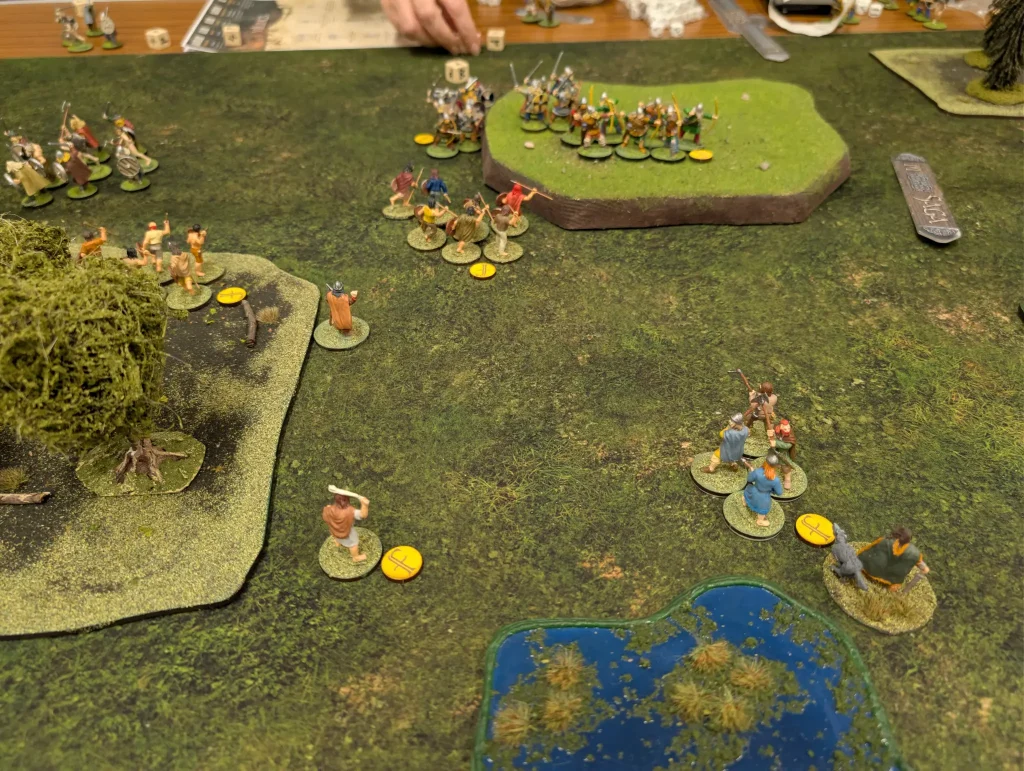
At the start of the Vikings go, the middle of the table was no rather empty. The Vikings archers tried to shoot my warriors in the open, and missed. The second (and now only) Viking warriors moved up to the edge of the woods, and this time I remembered to shoot at them with Sons of Dana, getting a single kill.
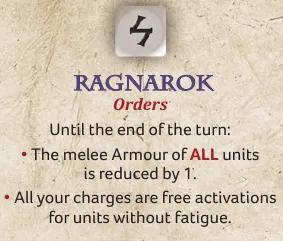
The Vikings then played Ragnarok. Though I’ve just realised that this is an Orders ability, so needed to be played at the start of the turn. I don’t recall whether it was or not, but it didn’t really make a difference.
As it was, we also completely forgot that it reduced the armour of all units, so there probably should have been more killing on both sides.
The main use of it though was to get some free charges. The warriors charged by warriors hiding in the woods, killing four of them. I used Spirits of the Land which gave me a +1 to my defence rolls whilst in uneven terrain, which really helped. The Irish killed two vikings as well, but had to fall back.
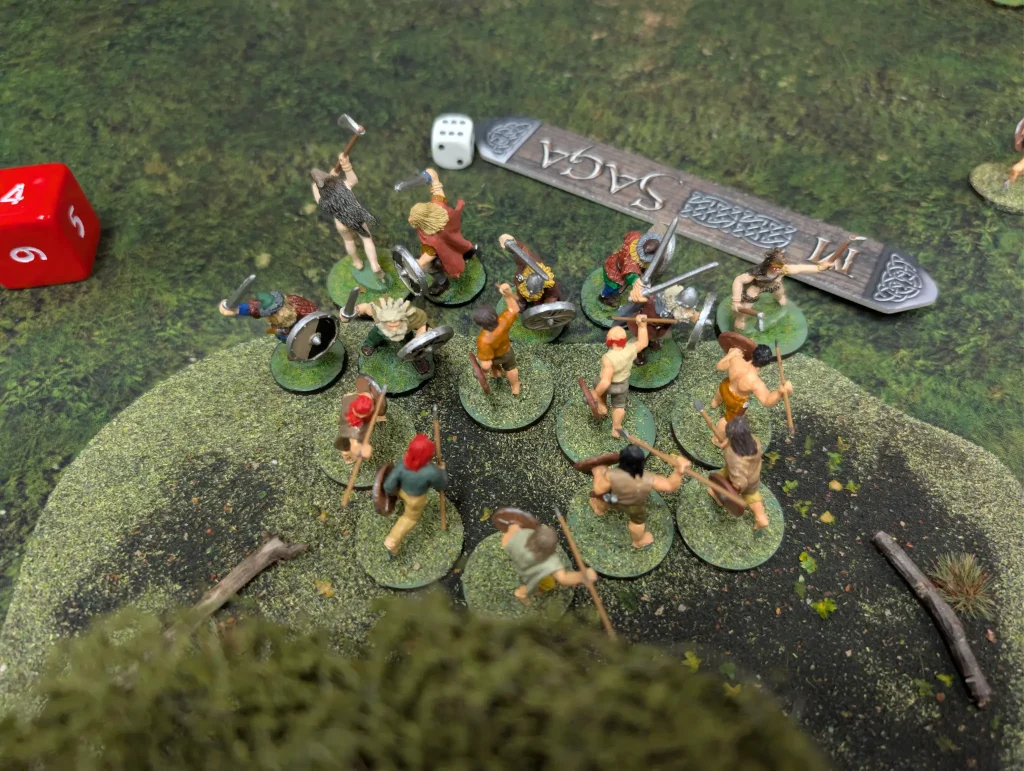
The hearthguard charged my warriors outside the woods, using Heimdall to lower their armour to gain five attack dice. That would have really hurt if we’d remembered that armour was meant to be lowered from Ragnarok. They got nine hits and five hills, taking no casualties themselves and forcing my warriors back.
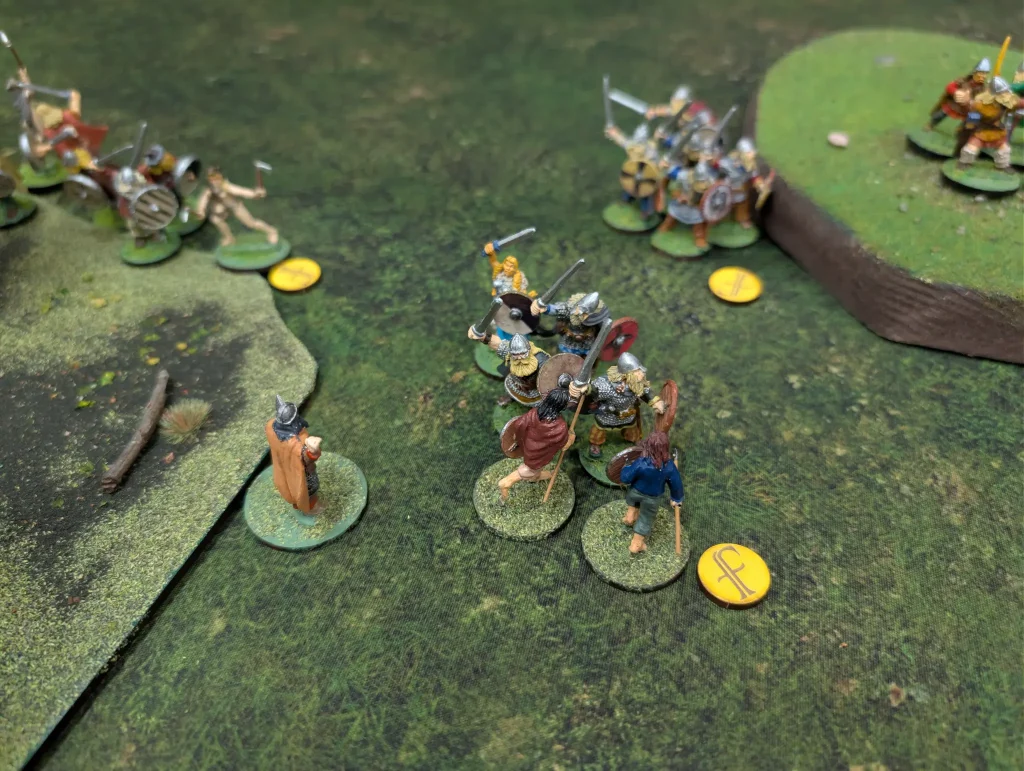
Then the other hearthguards moved and charged the same warriors, getting another four kills and wiping them out.
The End
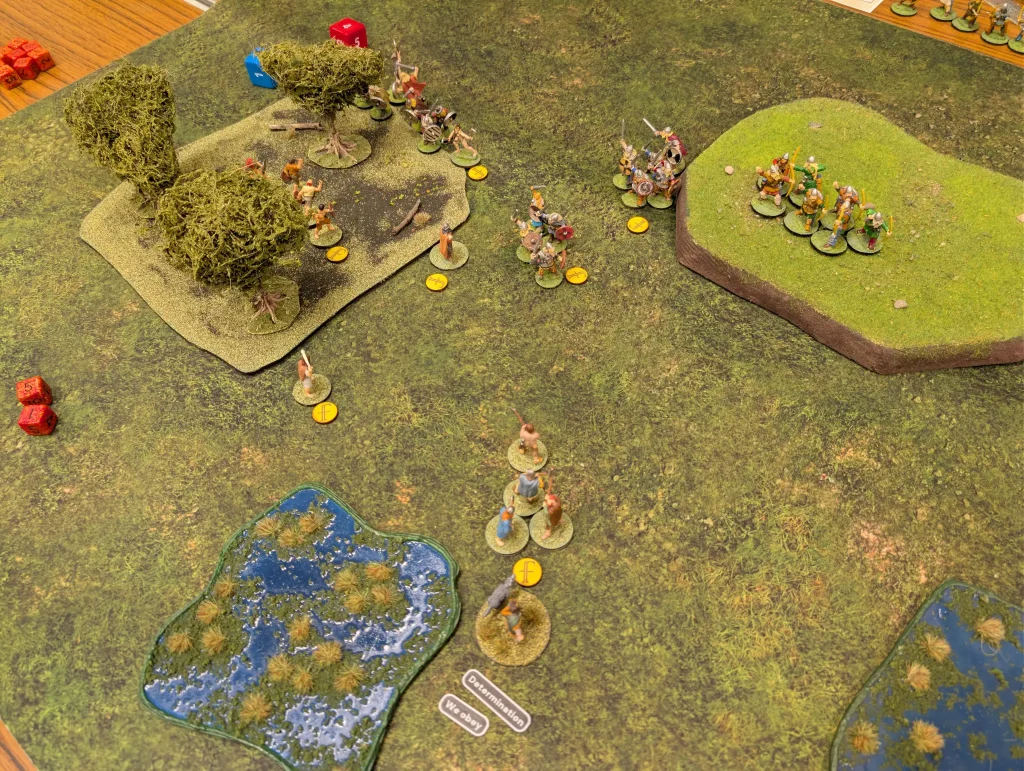
This was turn four, and we were meant to do five turns, but it was over for the Irish. We counted up points, and the Vikings got 18 points to the Irish 11. So a clear Viking victory. Even if we assumed a few more Vikings had been killed due to Ragnarok, it wouldn’t have evened things up.
So our first battle using the new Saga boards was complete, and it had ended much the same way all our Viking/Irish battles have ended – with victory for my opponent.
One of the most useful Viking abilities used to be Njord, which was a single rare to remove fatigue from all units with M of the warlord. This has completely changed so that it is two commons to give +1 to attack dice rolls, but only affects hearthguards. Previously it allowed Vikings to be really aggressive, moving up the table quickly to press the attack, with their hearthguard leading from the front.
Now the Vikings have nothing like this, so their tactics have to completely change.
Ragnarok is a lot easier, which might make up for this, but we’ll need to play a few more battles. Hearthguards don’t need to be up at the front line any more though.
Berserkers are probably better. They used to be glass cannons. With an armour of 3, they could easily be taken out by shooting attacks before they got into melee. And if you got them into melee, you might as well use Valhalla on them, sacrificing them all for a big attack dice bonus. They were good against oversized units (such as when fighting units of 8 hearthguard), but otherwise they were just trading a unit for a unit.
The Irish seem to favour hearthguards a bit more now – the Old Way and Fir Bolg can be used with them, and the latter especially is good with heavy weapon equipped hearthguard.
It will take few games to figure out all the differences, but gives a reason to go back to playing Age of Vikings again. It was a good game though,
Just when Age of Caesars is out. I now have an Imperial Roman army for that, as well as a Militis Christi army for Age of Crusades, so we have lots of choices of periods to play.